On February 28th, a new war broke out between the US and Israel on one side and Iran on the other. It has until now consisted of two parallel bombing campaigns: a US-Israeli bombing campaign on Iran, and an Iranian bombing campaign on most of the Middle East. The US and Israel have been preparing for this war for months, and both sides have considered it for decades. Indeed, for the Iranian regime, being a counterweight to the US in the Middle East is an important reason for the regime’s existence.[1]
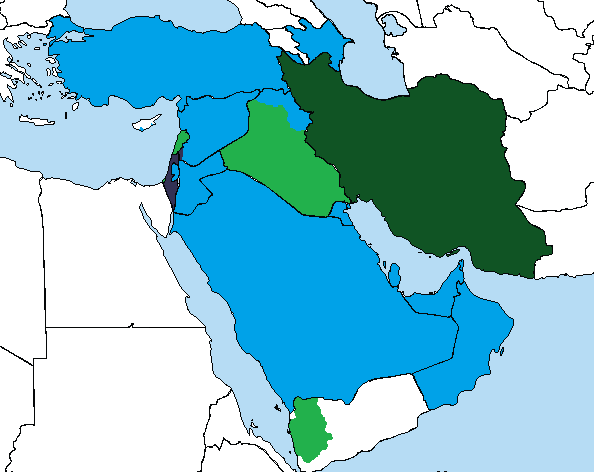
Iran has taken the most damage in the first weeks of war, with most of the deaths of the war happening in Iran, extensive damage to Iran’s military and the death of much of Iran’s political and military leadership. Despite this, Iran shows both the capacity and will to keep fighting. The US-Israeli alliance, on their end, find themselves in a war that’s tough to win, but harder to back out from.
This article asks the question of who wins the war, and will attempt to make the argument that although the US position is dominant, their victory is far from assured. To explain this, I will go through the goals of the two sides, their means to achieve them, and the probability that they will do so.
I concern myself here with winners and losers, and not much with the human cost of this war. Of course, the human cost is the grim part, and why war matters. The dead, but also the wounded, traumatized and displaced of war are the real story. The war, which is likely to last for some time and accomplish very few goals for very few people, is shaping up to be a tremendous waste of human fates and efforts, and a massive net negative to all.
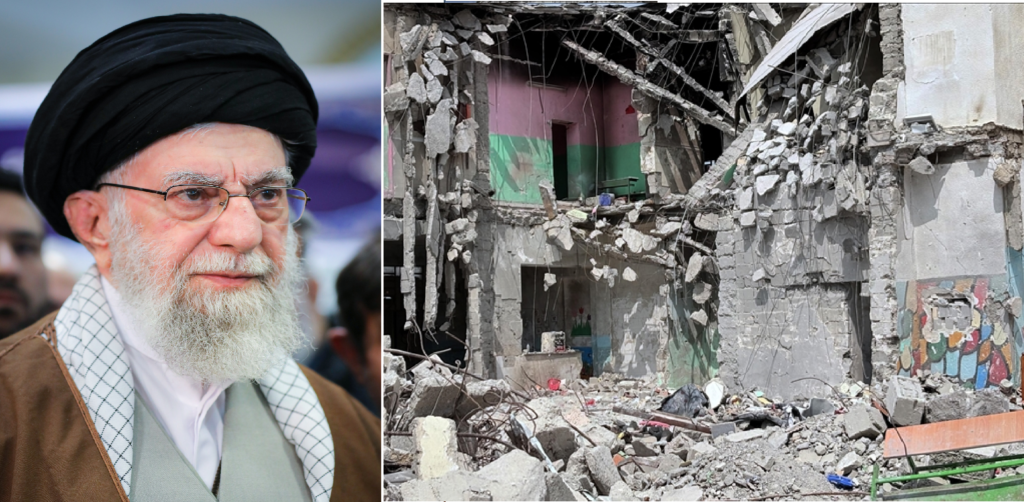
The attack on Iran is in very clear violation of international law and possibly in violation of US law concerning the involvement of congress. What’s more important for the US in terms of reputation and strategy is that it’s a very stupid war. Iran’s regime is ideologically driven and prepared for exactly this conflict, and the arena for the war is in one of the most important regions in the world for global trade and energy security.
Article contents:
1. War goals of the two sides
2. Military power of the two sides
a. Power of the US and Israel
b. Potential US-Israeli allies
c. Power of Iran
d. Iranian proxy allies
3. Losses and ability to sustain the war
a. US-Israeli losses
b. Iranian losses
c. Hormuz
4. Possible outcomes of the war
a. Negotiated end
b. Total war
5. Conclusion
1. War Goals
What does it mean to win a war? To simply define a winner from who has inflicted the most damage is impractical and ends up reaching the obviously wrong conclusion in many wars. Looking for the winner as being the one that ends up not surrendering, or not wholly defeated is a sure method, but we can’t be sure that one side will give in or collapse in this war. For our purposes I will try to find out what the goals of each side are, and how likely they are to achieve them.
Unlike the Twelve-Day War, which was launched by Israel with the specific, achievable and limited goal of weakening the Iranian nuclear program, this war’s aims from the US-Israeli side are wide and unclear. Initially, US leadership appeared aware of this, and president Donald Trump outlined four goals for the war. These were to destroy Iran’s missile program, destroy Iran’s navy, end Iran’s nuclear program and prevent Iran from arming “terrorist groups” abroad.[1]
These goals as stated are already broad and difficult, and later statements make the war even more unlimited in nature from the US side. US leadership up to and including the president have mused about regime change and unconditional surrender for Iran. If the US only commits to degrading the military capacities of Iran, the war will still likely take months, but it is winnable. If the US military commits to regime change, a bombing campaign will not be enough.
These war goals warp as the war progresses. A particular subgoal that becomes more and more prominent is the opening of Hormuz, as high oil prices due to the closing of the strait is proving unpopular. Such subgoals are simply reversing the enemy’s advance, however, and is not a victory in itself. Stopping an enemy’s counterattack can be claimed as a victory, but it is unimpressive if you started the war.
On the Iranian side, the goals of this conflict specifically seem to be as simple as regime survival. In a more long-term sense the Islamic regime of Iran has a goal to drive the US and Israel out of the Middle East and to become the chief regional power, but this war, where Iran is on the defensive, is not about a total victory for Iran. They are the weaker side in the conflict, and their leadership knows it.
Iran’s win condition is to outlast the US’ will to fight. The closing of the strait of Hormuz and the attacks on energy infrastructure in the Gulf states by Iran are clear attempts to disrupt the global economy, likely in the hopes that this will make the war unpopular in the US domestically and with the US’ allies.
In anything short of a complete collapse for Iran, both sides will likely claim victory, and the outcomes and effects will be debated. In those debates it will be good to keep in mind what the goals were from the start. If the war ends and Iran’s missile program still exists, their navy is being rebuilt and their proxies still operate all over the region, it will not be a US win.
Sources
2. Opposing sides
The US-Israeli style and doctrine of warfare is fundamentally different to that of Iran. The US is highly dependent on air supremacy, using superior air power to first force opposing air power out of the sky and then using air power to destroy whatever is needed destroyed on the ground. It is an expensive style of warfare, but provided you have the budgets it works well to minimize casualties on your end and to win in symmetrical confrontations.
When an enemy is sufficiently weakened by air power, the US uses airmobile and mechanized forces to win a ground war quickly. The type of war that the US fought in Iraq and Afghanistan after the initial offensives were successful is perhaps the worst type of war for the US to fight, and in those occupation and counter-insurgency contexts the US prefers using local allied forces to fight on the ground whenever possible.
The Iranian doctrine is optimized in a very different way. Iranian rocket forces rely on large arsenals of cheap ballistic missiles and cheap kamikaze drones to overwhelm enemy air defenses and cause harm to an enemy’s infrastructure. These drones and missiles are typically produced in decentralized subterranean factories, to protect them from enemy air strikes.
To this end, numbers of heavy Iranian equipment, which would usually be one of the first things to look at in a war such as this one, really don’t matter much for the outcome of the war. The type of strength used by Israel and the US on one side and Iran on the other is different, and must be measured differently.
2.a. US and Israeli Power
The Israeli air force numbers in the war are the easiest to figure out, as the entirety of the Israeli air force is already in the region. The Israeli air force had 278 combat airplanes at the start of the war, which is already more than Iran had available before losses.[1] US air power in the Middle East prior to the start of the war had reached over 300 aircraft, of which 70%, or 230, were combat airplanes.[2] Conventional Iranian air power, in contrast, is at some 200 aging planes, with more than half acquired by the Pahlavi dynasty prior to the 1979 revolution.
Around half of the US air power in the Middle East is held on the two aircraft carriers USS Gerald R. Ford and USS Abraham Lincoln. Most of the remainder is currently held in Jordan, as the US air bases in Iraq, Kuwait, Bahrain, Qatar and the UAE are within range of all Iranian missiles. Bases in Jordan and Israel are only in range of Iranian medium-range missiles, which Iran has fewer of. If Iranian missile capabilities are sufficiently weakened, more aircraft can be stationed at bases in the Persian Gulf that are now too exposed to Iranian missile and drone attacks, and the intensity of the bombing campaign may still be ramped up.
Israel’s available number of combat aircraft are greater, but the US has well over 2000 combat aircraft in total in the air force, navy and marine corps. In a prolonged war with Iran, US air power is functionally infinite, with the only consideration being that Iran could weaken the US for a later major war. The US is still sending more aircraft into the conflict, with at least 12 F-35 fighter jets en route to the Middle East being spotted.[3] A third US aircraft carrier, the USS George H.W. Bush, is on its way to the Middle East, but it’s unknown if it will serve as a third carrier or if it will allow one of the two already stationed to complete its service rotation.[4] There are usually six deployed aircraft carriers out of the US’ total of 11, and half of the deployed capability being in one region would be highly unusual.
Aside from the air power used to strike Iran, US surface warships and submarines have been missile striking Iranian ground targets, and US ground based missile systems have been striking Iranian naval targets. More than a dozen US surface warships have been deployed to the seas around the Middle East, not counting those ships deployed within the two carrier strike groups in the region.
No major US ground forces are stationed around Iran, aside from the normal peacetime disposition. If a ground invasion is planned, it is either planned to be carried out after the air campaign has concluded, or to be limited in scope. The government of Iraq is unlikely to allow the US to carry out an invasion from its territory, and therefore the US will have to deploy ground forces in the Gulf States, which are currently quite vulnerable to Iranian strikes.
2.b. Potential US allies
As Iran retaliates against US and Israeli strikes, their missiles and drones have hit a total of 13 countries throughout the Middle East. Israel has been the focus of most medium-ranged Iranian missiles that have been launched, and the UAE has been the target of the most short-ranged missiles and drones. Major attacks have struck the Gulf states of Qatar, Bahrain, Kuwait and Saudi Arabia, as well as Jordan and the autonomous Kurdish region in Northern Iraq, while smaller attacks from Iran have struck Oman, Syria, Azerbaijan, Turkey and a British base in Cyprus.
None of the countries bombed by Iran have retaliated against Iran directly, aside from Israel, which started the conflict together with the US. For the Gulf states, the reason is most likely primarily about self-preservation, until now the Iranian strikes have mostly hit infrastructure linked to the US military in their countries. If they participate directly, their own military infrastructure becomes a valid and vulnerable target.
It’s not clear if the Gulf states desired a US war with Iran. The Saudi Arabian crown prince Mohammed Bin Salman (MBS) told Iran that he would not let the US use Saudi Arabian territory as a base for strikes against Iran, but he also supposedly pushed the US leadership to carry out the attack.[5] Iran and Saudi Arabia have been rivals for a long time, and Saudi Arabia’s long term goal is to see the Iranian regime toppled. If the Saudis don’t need to be involved directly, even better.
If the Gulf states were to join the war, well over 600 modern warplanes stationed close to Iran would join the conflict.[6] Over half that number comes from Saudi Arabia, which is the country that would likely provide the greatest help to the US and Israel if they joined. The Gulf states are also some of the most viable allies for the US to use in a coming occupation, if needed. The Gulf states, on their end, have little to gain from such an arrangement, and are unlikely to join a war until after Iranian forces are even more degraded.
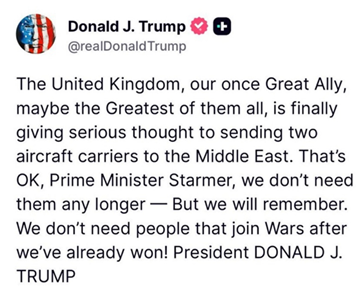
Aside from regional allies, the US could call upon NATO to support them in the Middle East. More planes to support the US would not do much, as they would simply fill up the limited capacity at the air bases in the region. The UK, with their two aircraft carriers, and France, with their one, could conceivably make a difference. Indeed, France has deployed its aircraft carrier to protect shipping in the Mediterranean, which places it close to the conflict.[7] The UK appears to have decided against deploying an aircraft carrier to the conflict zone after placing it in high readiness.[8]
If the war turns into a ground war, the US might seek to gain the support of opposition groups in Iran. Enlisting the help of Kurdish militias in Iran with support from militias in Iraq’s northern Kurdish autonomous region could create a front on the ground in Iran’s western regions without direct US involvement, and US intelligence agencies have been working towards this goal.[9] Other Iranian ethnic minorities, like the Azeri population in the northwest and the Arab population in the southwest have traditionally stood for less separatist activity.
2.c. Iranian Power
The Iranian armed forces are split into two, one side being the ordinary Army, supposed to defend Iran from external threats, and the other being the Iranian Revolutionary Guard Corps (IRGC), supposed to defend Iran from internal and moral threats, at least in principle. The IRGC is also the group running the missile program, the main Iranian military reserve force, around half of Iran’s total naval force, the support of foreign armed groups, and much of the Iranian economy.
The missile program and drone programs run by the IRGC aerospace forces are the main threat against the US and allies in the Middle East in a direct war. The most commonly cited estimate of Iranian missile stocks is 3000 ballistic missiles, with no mention of how many are short ranged and how many are medium ranged. That figure, coming from a US marine corps general, is from 2022.[10] Iranian authorities do not tend to give out precise numbers on their own strategic capabilities.
Beyond the 3000 missiles in 2022 there is a lot of uncertainty. Iran has been steadily producing missiles since, but has also spent missiles in three previous rounds of mutual bombings with Israel. In the 2024 conflict between Israel and Iran, Iran used 120 ballistic missiles in April,[11] and 180 in October.[12] In the war in 2025, Iran launched over 500 ballistic missiles against Israel.[13]
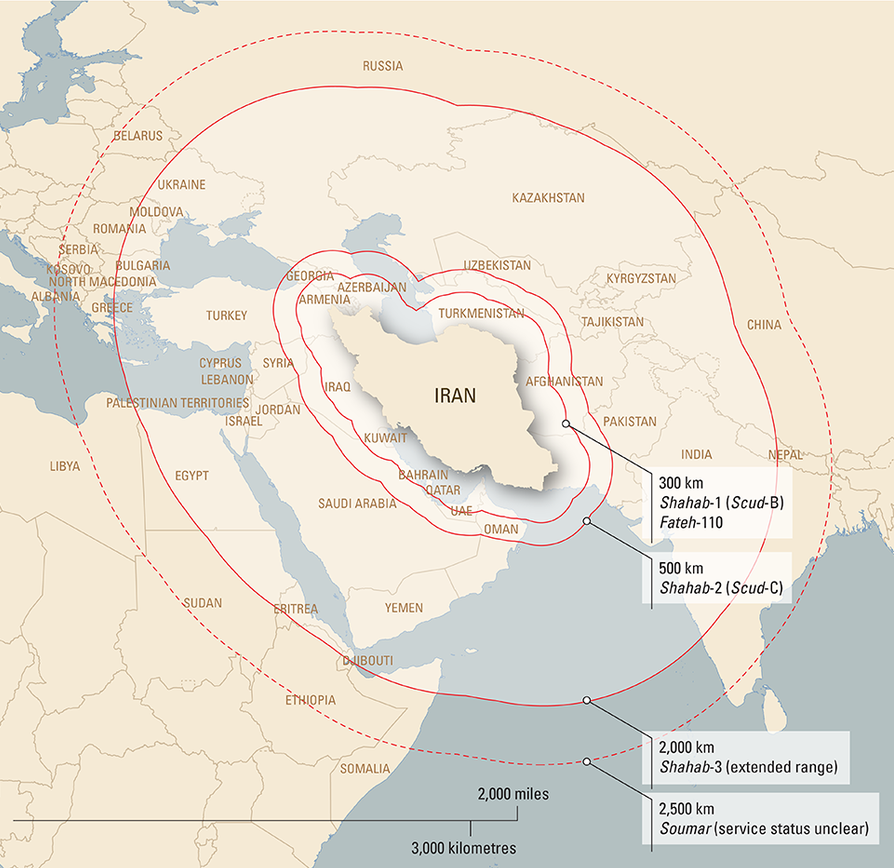
Aside from the roughly 800 missiles launched in 2024-25, Iran also provides missiles to their proxy groups, in particular the Houthis in Yemen and the Hezbollah in Lebanon. Both proxies have their own production of missiles based on Iranian recipes, but direct shipments have been discovered.[14] The total scale of these shipments is unknown.
Israeli military sources claimed after the 2025 war that 1000 Iranian missiles were destroyed on the ground, and that the Iranian missile arsenal was left at 1000-1500 ballistic missiles.[15] Circumstantial evidence suggests that the Israeli estimates were likely too optimistic with the scale of their destruction. Any power in a war has an incentive to deny their own losses and exaggerate those of the enemy, to keep up morale. Even if someone is attempting to be truthful, it is very hard to give an accurate assessment of enemy losses. Every abandoned missile site bombed by an Israeli plane could be assumed to have contained missiles, and the same with underground facilities that were bombed, but not pierced. Indeed, after ten days of war in 2026, the Iranian missile forces had launched over 2400 ballistic missiles, an impossible rebound if Israeli assessments from 2025 were accurate.[16]
While Iran has spent hundreds of missiles since 2022 and hundreds of missiles may very well have been destroyed, the missile forces have maintained steady production throughout the past four years as well. In 2024, satellite imagery showed that they were ramping up production in underground facilities, which should both boost the rate of production and make it harder to destroy.[17] After the 2025 war, the missile production was swiftly rebuilt while the nuclear program was neglected, as Iran was preparing for a real and rapidly approaching second war.[18]
The missile arsenal isn’t much of a help if the missiles can’t be launched, and one of Iran’s main bottlenecks in their missile program is the number of missile launchers. Israeli military sources claimed to have destroyed 250 missile launchers in 2025, which was supposedly two thirds of Iran’s launch capacity.[19] Iranian activity and Iranian losses in 2026 indicate that the Israeli estimates were either wrong about the scale of destruction or the scale of Iran’s launch capacity from the start. In any case, Iran possessed hundreds of missile launchers at the beginning of the current war.
The missiles of Iran are backed up by their drone program, which has an even more unknown size. Iran has a large production of their “Shahed” kamikaze drones, which they typically launch in combination with the heavier ballistic missiles. 170 drones were launched at Israel in April 2024, and over 1000 in 2025. The drones, which are inexpensive and relatively simple to build, are clearly produced in larger numbers than the ballistic missiles of Iran.
2.d. Iranian allies
Iran’s network of armed proxy groups have been varied in their responses to the attack on Iran. The main groups are the Hezbollah in Lebanon, the Houthis in Yemen, and a number of Iraqi paramilitary groups. The fall of the Assad regime in Syria was the loss of an important ally for Iran, and cut the Hezbollah off from their overland routes of Iranian support.
The Hezbollah has taken the most active role in the war, by firing rockets and drones into Israel from the north. The leader of the Hezbollah claimed that the renewed conflict was unrelated to the wider war, but the timing was probably not random.[20] The attacks were answered by new Israeli strikes into Lebanon. The Hezbollah was weakened during the 2024 war with Israel and further weakened by the fall of Assad, and is not as capable of fighting Israel as they would be just a few years ago.

What’s more, the Lebanese government has ordered that the Hezbollah should be disarmed. Previously, Lebanese authorities have spoken against Israeli strikes on the Hezbollah, as it violates Lebanese sovereignty. This time, instead of taking the role of partially shielding Hezbollah, the Lebanese government has essentially confirmed their acceptance of Israeli actions. Despite the order to disarm, the Lebanese armed forces have still not acted against the Hezbollah.[21] If they do, the Hezbollah could be the first proxy lost for Iran during this war.
The Houthi movement in Yemen has declared that they are ready to renew the conflict in the Red Sea if needed, but they have not joined the war yet.[22] Houthi-controlled northern Yemen was bombed by the US and UK in 2024 and 2025, and Houthi leadership appears wary of becoming a main target in the war. The Yemeni civil war has been dormant since a 2023 ceasefire, and the southern factions opposing the Houthis did not capitalize on the US-UK bombing campaign. With the UAE-backed Yemeni factions defeated by Saudi Arabian-backed factions this January, the Houthi’s enemies are again united, which may contribute to the Houthis being hesitant to act. If they do participate in the war, they may disrupt global trade even further, but also risk the future of their entire movement and a final defeat in the civil war.
In Iraq, the Iranian-backed paramilitary groups make up most Shi’ite factions of Iraq’s Popular Mobilization Forces (PMF), the state’s official ethnically organized reserve force. The largest of these groups is the Kata’ib Hezbollah, (different from the Lebanese Hezbollah) which immediately was involved in the conflict.[23] The rest of the Iranian backed militias in Iraq have yet to commit decisively to action against the US troops that remain in Iraq, but if they do, US bases in Iraq will be some of their most exposed.
Most PMF militias are Shi’ite, and most Shi’ite militias in Iraq are pro-Iran. The notable exception is the Saraya al-Salam led by the Shia cleric Muqtada al-Sadr, who has long sought to create a Shia-dominated Iraqi state that is free from Iranian influence. Depending on Sadr’s choices, his enormous influence could flip the war in Iraq in either direction: either he could try to gain popular support by fighting the US, or he could try to use Iran’s weakening to wrest control of Iraq’s Shia movement.
The Iraqi government is dominated by Iran-friendly Shia factions, but they really do not wish to be a target for US or Israeli attacks. Iraq’s role is hard, as the only country bombed by both sides of the war. If the Iranian-backed militias intensify their efforts against US forces in Iraq, the Iraqi government will face a similar choice as Lebanon has with Hezbollah, to either condemn the US, condemn their own militias, condemn both or neither. No option for Iraq is comfortable. US strikes against the Iraqi state could shatter the weak state’s power, but if they’re seen as inactive against an aggressive US even more of the country’s majority Shia population could join into militias and diminish the Iraqi government’s monopoly on power.
Aside from Iran’s own proxies, there are no powers in the world that will come to the regime’s aid. Russia has a clear interest of the Iranian regime surviving, but is caught up in its own expensive war in Ukraine, and doesn’t have much strength to spare. When Assad’s regime in Syria was about to fall, Russia did nothing.
Sources
[1] https://www.flightglobal.com/defence/2025-world-air-forces-directory/160846.article
[2] https://www.aa.com.tr/en/americas/open-source-data-indicates-more-than-300-us-military-aircraft-deployed-to-centcom/3839313[3] https://www.twz.com/news-features/more-u-s-fighter-aircraft-heading-to-middle-east
[4] https://www.forbes.com/sites/petersuciu/2026/03/09/additional-aircraft-carriers-could-be-deployed-to-the-middle-east/
[5] https://www.ynetnews.com/article/sjzbkfby11l
[6] https://www.flightglobal.com/defence/2025-world-air-forces-directory/160846.article
[7] https://ukdefencejournal.org.uk/french-aircraft-carrier-proving-its-worth-in-mediterranean/
[8] https://www.telegraph.co.uk/news/2026/03/09/hms-prince-of-wales-aircraft-carrier-middle-east/
[9] https://edition.cnn.com/2026/03/03/politics/cia-arming-kurds-iran
[10] https://www.centcom.mil/MEDIA/Transcripts/Article/2968166/senate-armed-services-committee-hearing-on-the-posture-of-united-states-central/
[11] https://www.washingtonpost.com/world/2024/04/14/mapping-wide-scale-iranian-drone-missile-attacks/
[12] https://www.nytimes.com/live/2024/10/01/world/israel-lebanon-hezbollah
[13] https://studies.aljazeera.net/en/analyses/twelve-days-inferno-cost-opening-pandora%E2%80%99s-box#
[14] https://maritime-executive.com/article/iranian-arms-shipment-routes-to-houthis-revealed-by-large-seizure https://www.iranintl.com/en/202511172601
[15] https://www.timesofisrael.com/the-israel-iran-war-by-the-numbers-after-12-days-of-fighting/
[16] https://www.jpost.com/defense-and-tech/article-889435
[17] https://www.reuters.com/world/middle-east/satellite-photos-show-iran-expanding-missile-production-sources-say-2024-07-08/
[18] https://www.nytimes.com/2026/02/06/world/middleeast/iran-missile-nuclear-repairs.html
[19] https://www.timesofisrael.com/the-israel-iran-war-by-the-numbers-after-12-days-of-fighting/
[20] https://www.upi.com/Top_News/World-News/2026/03/04/lebanon-hezbollah-leader-israel-aggression/6851772658355/
[21] https://today.lorientlejour.com/article/1498266/hezbollah-disarmament-why-the-lebanese-army-chief-hesitates-despite-governments-green-light.html
[22] https://www.middleeastmonitor.com/20260306-houthi-leader-declares-support-for-iran-and-warns-group-ready-to-act/
[23] https://shafaq.com/en/Security/Kataib-Hezbollah-vows-attacks-on-US-bases-after-Iran-PMF-strikes
3. Losses and sustain
Both sides of the war’s ability to fight a long war is restricted by ammunition concerns, economic concerns, and willingness to fight, while only the Iranian side has had direct losses great enough to break down their ability to fight if they continue. US and Israeli material losses, while expensive, would need to be greater to reduce their ability to fight the war.
3.a. US-Israeli material losses
The most well-known US loss of equipment so far has been the accidental shootdown of three F-15 fighters by a Kuwaiti pilot, who believed they were Iranian planes. Those planes cost around $100 million each. In addition, the US and Israel have both lost around a dozen advanced drones that cost $30-40 million apiece. These aircraft losses are very public, but they are not the most painful or expensive loss for the US-Israeli side.
One US radar for their THAAD air defense system has been destroyed in Jordan, and up to three more THAAD radars may have been destroyed in Saudi Arabia and the UAE. There are 11 of these systems, of which eight are owned by the US, two by the UAE and one by Saudi Arabia. It is likely that some or all of the three THAAD systems struck in the Gulf states were operated by the host country itself, but it still signifies a loss of air defense capacity for US allies in the region. Without their radars, the systems are almost blinded, and they are slow and expensive to replace. Each new radar would cost around $500 million to replace.[1]
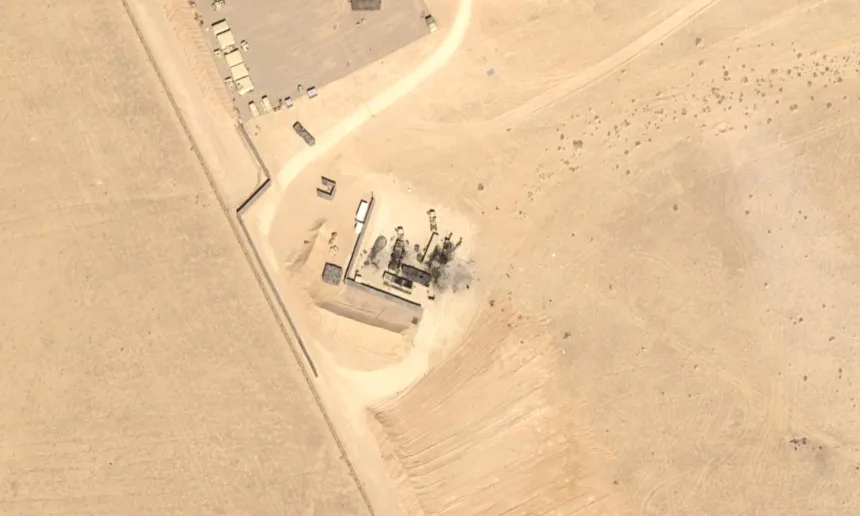
General damage to base facilities is harder to place a dollar value on, but it will take time and money to rebuild the damage that more imprecise Iranian strikes have done on US facilities. 11 US military bases in the Middle East, nearly half of US bases in the region, have been hit at least once by Iranian strikes.[2] These strikes reduce US readiness to move forces closer to Iran, even if Iranian missile and drone capabilities are degraded enough to let the US station warplanes or ground forces in the Gulf. In short, the Iranian strikes have delayed a possible US escalation by destroying critical military infrastructure.
Where the US and Israel have spent more than Iran is with the cost of their ammunition. The early strikes on Iran used enormous numbers of precision munitions, which take a lot of resources and a long time to replace. In the first two days of war alone, the US spent munitions worth $5.6 billion.[3] That rate of spending would be wildly unsustainable, and US forces are moving to more inexpensive laser-guided bombs, but even those stocks will be depleted, if the war carries on. The longer there is war in Iran, the more it will affect the readiness of the US to fight a similarly extensive war against an enemy somewhere else.
The US can keep fighting the war indefinitely, but it is expensive. With the moment of surprise in the past and the US no longer using its best munitions for the war, the damage dealt to Iran will be slowing down. As the prospect of a long war becomes clearer, the longevity of the US war effort becomes a question of willingness to fight and budgeting.
3.b. Iranian material losses
Iran has had much greater direct material losses, but the capabilities of the armed forces are not gone. The most diminished is probably the Iranian air force. It was already in a sorry state, with many old planes of different models in need of repairs. Much of the Iranian air force has been destroyed on the ground by US-Israeli air strikes, apparently not seeing a need to waste pilots on getting the jets shot down from the air instead.[4] The only Iranian planes lost in the air are one Iranian fighter shot down by an Israeli F-35 near Tehran,[5] and two fighters shot down by Qatar over the Persian Gulf.[6] Low Iranian airplane losses in the air points to a low presence in the skies in general.
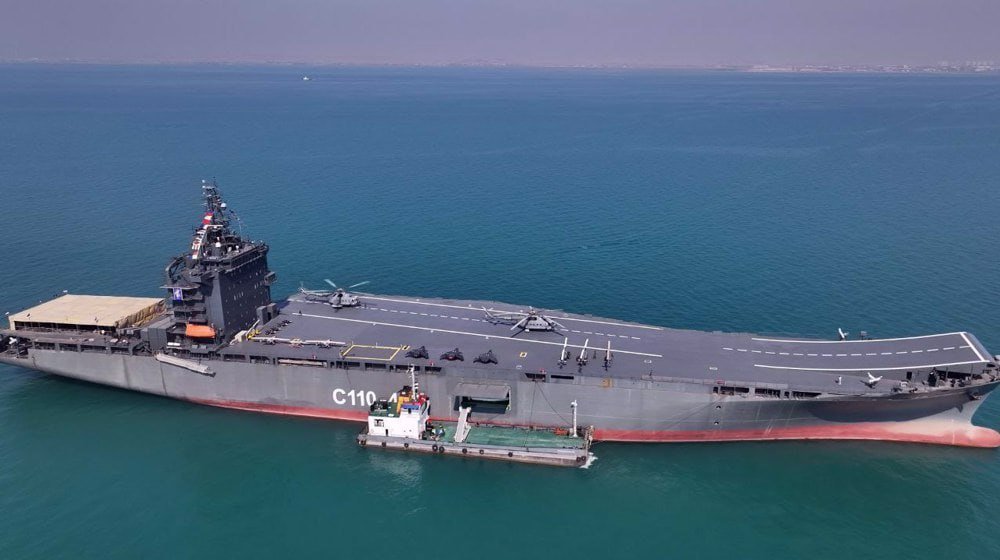
The Iranian navy is also mostly destroyed. Every Iranian frigate has been sunk or destroyed except the one in the Caspian Sea, and the same goes for every Iranian corvette. What remains of Iranian surface combat ability are the 35 missile boats used by the navy and IRGC, but how many of them remain afloat is currently unknown. One of two active regular submarines has been sunk. The remaining submarine, missile boats and Iran’s 10-20 Ghadir-class midget submarines remain as the only possible challenges to US vessels in the Persian Gulf.[7]
The reduction of the most important Iranian capacity, that to fire missiles, is not fully clear. The Israeli military estimated on March 7th that it had destroyed 75% of Iranian missile launchers, but there is no visual evidence to back this up.[8] The main piece of evidence that the Iranian launch capacity is diminished is that fewer missiles are being fired, but that can be interpreted in two ways. One is, indeed, that Iranian missile launchers are fewer or that the missile stocks are nearing empty. The other, however, is that Iran is intentionally ramping down their launch activity to save force for a longer war. Most likely the reduced launch numbers are a result of a combination of the two reasons. Days after Israeli reports claimed that the reduced launch numbers are solely a result of destroyed launch capacity, they haven’t fallen any further.[9]
The most exposed parts of the Iranian security infrastructure are likely to have been destroyed first, and with the US-Israeli alliance switching to less complex munitions they are unlikely to destroy the rest of Iranian missile capacity anytime soon. With few reports of production sites and storage units having been destroyed, it is likely that Iran can keep up smaller scale strikes on US allies in the Gulf almost indefinitely. This will make it hard for the US to unilaterally leave the war, as even if they do, trade will still be blocked and their allies will still be under attack.
3.c. Opening Hormuz
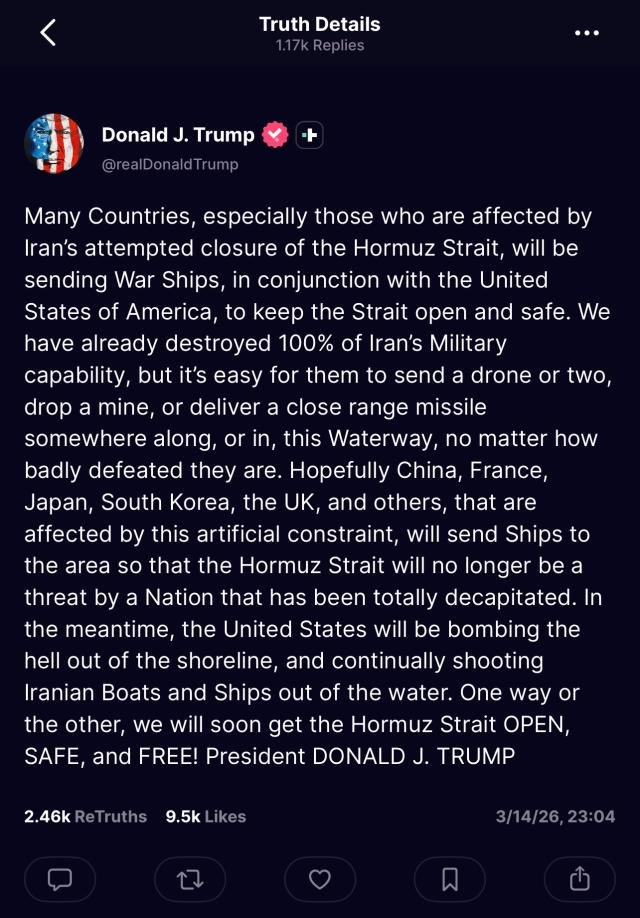
Opening the Strait of Hormuz has turned into the most pressing issue for US leadership. The closing of the strait cuts of a fifth of global oil supply and a fifth of global gas supply, spiking energy prices. Additionally, the Gulf States, allies of the US, rely on the strait for their imports, up to and including most of their food supply. The US has attempted to threaten Iran to let shipping pass through the strait, and Iran has not complied, meaning the US may soon attempt to open up the strait by force.
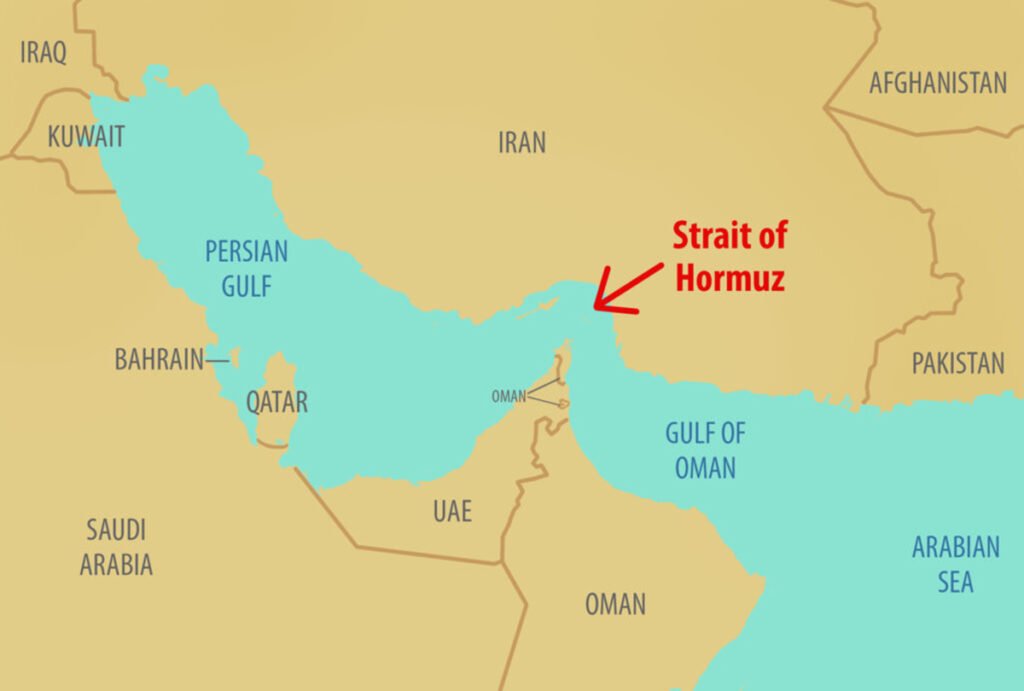
The difficulty in opening the Strait of Hormuz is that the risk for oil tankers and container ships passing through needs to be low enough that they’re willing to take it. The threat to the ships are threefold: missile or drone attacks from Iran, attacks from Iran’s remaining naval forces, and sea mines left by Iranian mine layers in the beginning of the conflict. Iran’s Qeshm island serves as a base of operations for the IRGC to make the strait dangerous.
Threats from the Iranian navy and Iranian missiles can be minimized by using warships as convoy escorts for shipping. The US has 73 Arleigh Burke destroyers, the ship they would likely use for this role. A quarter of deployable US destroyers are already deployed in the Middle East without having attempted to open the strait,[10] which implies that the US will need more time to degrade Iranian capabilities or help from other countries to reopen Hormuz shipping.
Naval mines serve as a threat the US navy is especially unprepared against. Of the eight Avenger-class minesweepers operated by the US navy, half were decommissioned last year.[11] US navy leadership claims that their Littoral Combat Ships can carry out the needed minesweeping, but their capabilities are untested. The extent of Iranian minelaying in the strait is unknown.
The US could make clearing the strait easier by capturing Qeshm island. Such an invasion is one that the US marine corps would win, and would help opening up Hormuz, but it would mean controversial casualties for the US. Further, it would require a prolonged deployment of ground forces on an island very exposed to attacks from the Iranian mainland.
Overall, opening up the Strait of Hormuz can be done, but it will be risky, deadly and complicated for the US. Closing the strait is Iran’s main source of leverage, and the Iranian military will try their hardest to prevent it being opened by force. It was Iran’s most important plan prior to the war, and something the US government, on their end, really should have planned for better.
Sources
[1] https://edition.cnn.com/2026/03/05/middleeast/radar-bases-us-missile-defense-iran-war-intl-invs
[2] https://www.nytimes.com/interactive/2026/03/11/world/middleeast/iran-us-military-bases-strikes-map.html
[3] https://www.washingtonpost.com/national-security/2026/03/09/iran-war-cost/
[4] https://www.twz.com/air/iranian-f-14-tomcats-meet-their-doom-in-israeli-airstrikes
[5] https://theaviationist.com/2026/03/04/f-35i-downing-yak-130/
[6] https://www.aljazeera.com/news/2026/3/2/qatar-says-it-downed-two-iranian-fighter-jets-as-conflict-widens
[7] https://www.janes.com/osint-insights/defence-and-national-security-analysis/iran-conflict-2026-the-demise-of-the-iranian-navies
[8] https://www.jpost.com/middle-east/iran-news/article-889169
[9] https://warontherocks.com/2026/03/dont-count-launches-misreading-irans-drone-capacity/
[10] https://www.atlanticcouncil.org/commentary/trackers-and-data-visualizations/tracking-us-military-assets-in-the-iran-war/
[11] https://www.navytimes.com/news/your-navy/2026/03/12/the-us-navy-decommissioned-middle-east-minesweepers-last-year-heres-what-they-did/
4. Possible futures
To round out the article, I will present the two main outcomes I see as the most likely as the war drags on. The two are a negotiated end, which will probably appear as a limited or temporary US victory, and a US invasion, which will all but guarantee that the war expands and drags on. I will attempt to explain how each outcome may be achieved, and what impact it will have.
4.a. Negotiated end
There are two main obstacles to reaching a negotiated end to any war. The first is to reach a point where both sides want to end it, and the second is to have sufficient assurances that a war will not start up again.
Even if Iran reaches a pain limit where the leadership would like to surrender, the difficulty of reassuring Iranian leadership that a new attack won’t happen remains. US and Israeli leadership have shown a willingness to attempt regime change in Iran. Even if the US air power in the region is withdrawn, it can be redeployed to the Middle East again in months if the US at a later date wants to restart the war.
Regardless of assurances of peace, the Iranian leadership likely doesn’t even want to end the war. The clerical regime has been suffering through a crisis of legitimacy for years, as it has struggled with justifying its supposedly “revolutionary” regime. The strict morality laws, the weakness of the elected president and a falling quality of life makes the rule of the Ayatollah hard to justify, when it’s been 47 years since the overthrow of the monarchy. The war has paused the Iranian protest movement and has proven one justification for the Islamic regime right: the inevitable war with the US.
If Iran agrees to anything that remotely looks like a surrender, every reason the Iranian regime gives for its own existence will have been proven wrong. If Iran continues the fight, however, the more militant support base of the IRGC will remain.
The US, on its end, is also unlikely to seek a negotiated end to the war, even if the war remains unpopular. For one, losing wars is even more unpopular than fighting them. If the US government is going to throw up the mission accomplished banner and declare the war won, they will need to have achieved something. Opening Hormuz, for example, can be declared a victory and the point of the entire operation, even if Iran could close the strait again next time a war breaks out.
The second issue for the US-Israeli side in seeking negotiations is the same dilemma that Iran faces, there can be no guarantee that Iran under its clerical regime won’t rebuild their missile program. This issue is especially relevant for Israel, which is in range of Iranian attacks. The Israeli government has bet on this war leading to regime change in Iran. The US is not going to leave Israel fighting alone.
If these obstacles can be overcome and the war ends, Iran will lick its wounds, rebuild its military infrastructure farther underground, and prepare for another round. Rebuilding oil and gas infrastructure in the Gulf States will take time, and cost billions. Energy prices will remain high until the repairs are concluded, and an anxiety will linger in the Gulf States that they will be targeted if another war begins.
4.b. Total war
The most desired outcome for the US government would be that the Iranian people rose up in armed revolt against the Islamic regime and put a US-friendly leader in power. This will not happen. There is no ongoing Iranian insurgency seeking to overthrow the government, and as the bombing continues, the people of Iran will turn more against the US, not against their own leaders. This dynamic has been proven time and time again, bombing someone until they love you doesn’t work.
Thousands from the Iranian diaspora has gathered in rallies to support the US bombing of the country they claim as their own homeland. This is no proof that the US has support in Iran with the population that actually lives there. The diaspora has no skin in the game, they’re not the ones being bombed. For much of the diaspora rallying in favor of the US, they haven’t been in Iran for decades, if they were even born there. Picking out the new Iranian leadership from the diaspora would alienate the people of Iran and prove a massive mistake in the long run, but the US very well might do just that.
The armed opposition against the Iranian government that does exist in the minority-populated outskirts of Iran will not be able to overthrow the government, nor do they seek to do so. Kurdish militias, for instance, seek self-governance in their own region, regardless of who rules Iran, and their strength comes from local popular support. A Kurdish run on Tehran would be illogical and suicidal. If ethnic militias will rise up against the Iranian government, it will be only in certain regions.
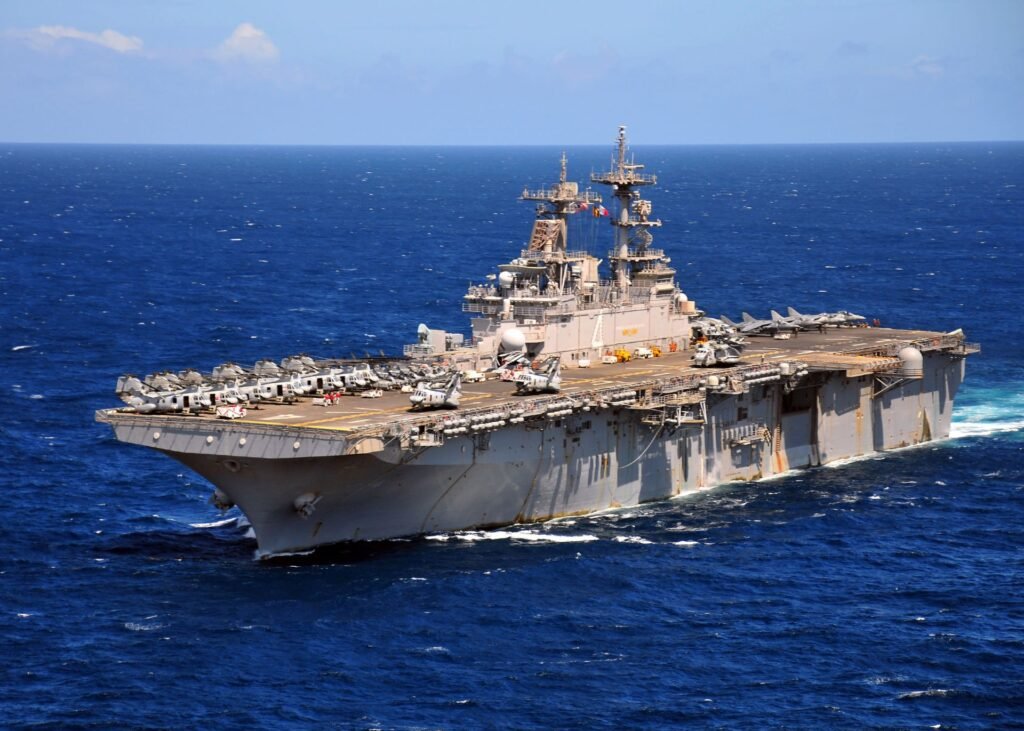
This leaves the US army and marine corps in charge of carrying out regime change. If the US prepares for it, an invasion of Iran is entirely feasible. The Iranian army and IRGC combined have hundreds of thousands of soldiers, but they are technologically outmatched and far less mobile than US mechanized and air assault forces. Provided the necessary precautions are taken, the invasion is the easy part.
The hard part comes after, which is to actually govern Iran, or to establish a friendly Iranian government. The IRGC’s reserve force, the Basij, has a total membership number in the millions. Iran matches Iraq and Afghanistan combined in geographic size and in population. The IRGC, with its decentralized organizational structure and strong support base in the countryside is a ready-made insurgency. Establishing a new Iranian government that doesn’t lose most of the country, or even lose power entirely, to loyalists of the Islamic regime, will require a lasting US occupation.
5. Conclusion
There are no real good outcomes for this war, and it has cost the Middle East and the world a lot already. Damage to military, civilian and energy infrastructure is extensive, and global trade disruptions are already poised to disrupt supply chains for months, if not years. Wars are always a costly and deadly affair, this one is no different.
It’s tough to say how this won’t end up being a mistake for the US-Israeli side. Aside from the direct costs of the war, the diplomatic implications are massive. The US has again participated in starting a war, with Israel as the only ally participating, and the only ally pleased with it happening.
For the Iranian regime, the war has justified a long-held belief that they would eventually be attacked by the US and Israel, and will likely harden their resolve. Without an invasion and regime change, the Iranian regime may be weakened, but more stubborn. An invasion of Iran would be even worse.
The conclusion is then, to answer my own question, that no one wins the Iran war. A select few individuals might gain from it, and it will harm some countries and their populations more than others, but no country, at least not the US or Iran, will end up seeing a net gain from the war.
Leave a Reply